
A few weeks ago, I posted a piece on this blog asking whether agentic AI would kill legacy marketing automation platforms like Marketo and HubSpot. Jon Miller, the Harvard-trained, Stanford MBA'd co-founder of Marketo and architect of the modern B2B demand generation playbook, showed up in the comments and posted a link to a rebuttal he had written to my blog post. After spending 30 minutes screaming like a teenager at a K-Pop concert, I composed myself and read his post.
Jon argued that bolting AI onto a rules-based engine doesn't make it intelligent, it just makes the rules run faster. He called it "paving the cowpath," and he was right. But it got me thinking about what exactly "survival" means for a legacy MAP in a world where agentic AI is rewriting the GTM stack from the ground up.
Legacy MAPs won't disappear. They will survive as execution pipes. The question I want to explore is what gets to be the brain.
What Marketing Automation Platforms Were Built to Do (and Why That Foundation Is Cracking)
Marketo launched in 2006 around a genuinely transformative premise: automate the sequence of touches a prospect receives based on behavioral triggers. Email opens, form submissions, page visits. If this, then that. Smart Campaigns. Nurture flows. Lead scoring. For its era, this was transformative, not just as software but as a category-creating argument that B2B marketing could be systematic rather than intuitive.
The architecture has one structural constraint that no AI feature announcement can solve, though. MAPs (Marketing Automation Platforms) are campaign execution engines built around their own data stores. A MAP knows what a contact did within its own channels, which emails they opened, which forms they submitted, which pages they visited when tracking code was installed. It does not know what the customer did in your product, at the point of sale, in customer service, or across any channel the MAP doesn't own. As CDP.com's analysis of the MAP versus CDP distinction puts it, MAPs identify customers by email address while CDPs resolve identity across anonymous and known touchpoints simultaneously.
This was manageable when the martech stack was small. Today, the average enterprise runs tech stacks of 15 to 25 tools, each maintaining its own copy of customer data, synchronized through brittle (and often monetized) API integrations and batch transfers that introduce latency ranging from 15 minutes to 24 hours. One documented warehouse-native deployment found that 12% of customer profiles had conflicting attribute values across systems, and the annual cost of maintaining that integration infrastructure can exceeded $340,000. The MAP's database is, at its core, a campaign log: a precise record of what your tools sent, not a coherent picture of who your customer actually is.
Jon himself has spoken candidly, including in this Demandbase podcast and this deep-dive on the history of marketing automation, about how the system Marketo helped build, optimizing relentlessly for MQLs, "causes us to do wrong by the customer." The architect of the category is building toward what comes next, and he's doing it by acknowledging the limits of what he originally built.

Why Warehouse-Native Intelligence Is the New Marketing Brain
My reply to Jon centered on a single architectural premise: the intelligence, memory, and reasoning layer of a modern GTM operation has to live closer to the data than to the execution channel, and today that means the cloud data warehouse.
The global cloud data warehouse market reached $26.8 billion in 2024, with marketing emerging as one of the fastest-growing activation use cases. Snowflake, BigQuery, Amazon Redshift, and Databricks have collectively created an ecosystem where organizations can consolidate behavioral, transactional, product, support, and intent data into governed, scalable repositories that serve as a genuine single source of truth. MessageGears outlines the readiness signals well for organizations evaluating whether their infrastructure is ready for this shift.
This matters for marketing because the MAP cannot build a unified customer graph at the scale and breadth that real personalization requires. Stitching together anonymous browsing behavior, known email addresses, device IDs, loyalty numbers, in-store transactions, and product telemetry is an identity resolution challenge that MAP databases were never architected to support. The warehouse solves this, and marketing tools access that unified profile directly rather than maintaining their own fragmented copies.
The technology layer that makes this operational is reverse ETL. Platforms like Hightouch, Census, and RudderStack monitor warehouse tables and sync modeled data back to operational tools, including ad platforms, email systems, and CRMs, on configurable schedules from real-time streaming to daily batch. The same documented deployment referenced above reduced campaign setup time from weeks to hours, achieved 99.7% data consistency across all activation channels, and eliminated $280,000 in annual integration maintenance. What I'm calling the MAP Demotion Architecture treats the warehouse as the brain, the agentic layer as the decision-maker, and the MAP as the mouth: each layer doing precisely the work it was built for, and nothing more.
The New GTM Stack: Legacy MAPs Become Headless Execution Pipes
Here is the part of this architecture shift that I want to be clear about, because it is easy to misread as a death sentence for MAPs. It's actually a demotion.
The agentic GTM operating model emerging from practitioners looks like this:
The MAP lives in the execution layer. It receives instructions. It does not make decisions.
This is already playing out in practice. Jason Lemkin's "10K," the AI VP of Marketing he's been running at SaaStr, autonomously generates campaign ideas, pulls segments from Salesforce and ticketing data, suppresses non-converting profiles, drafts copy, and stages everything for send. The workflow stops short of fully autonomous delivery not because the agent lacks the capability, but because, in Lemkin's own words, "Marketo's API is so old that pushing through it autonomously is genuinely risky."
That sentence is the architectural indictment. Lemkin's team also found that Marketo couldn't honor its own unsubscribes for ten days. The support ticket aged for a week and a half while the engineering team spent twenty minutes coding a bypass using Marketo's own API, one that a developer generously noted "hadn't been touched since 2014." When customers can route around your product faster than your support team can acknowledge the bug, the moat is no longer technology. It's inertia.
Meanwhile, the programmatic advertising market is already bifurcating between closed proprietary systems and open execution layers. Infillion launched the first agent-native advertising platform in December 2025, operating entirely through Model Context Protocol with no dashboards and no manual workflows. Gartner projects $100 billion in programmatic spend will flow through AI agents by 2028. The same bifurcation is coming for marketing automation broadly, and the composable CDP architecture is already showing how warehouse-native tools can eliminate the data duplication overhead of traditional MAPs while preserving the same execution functionality.
The Inertia Factor: Why Legacy MAPs Outlive Their Technical Merit
Something tends to get understated in coverage of this space. Legacy MAPs will survive longer than their technical merit justifies, for reasons that have nothing to do with product quality.
Enterprise MAP contracts run two to three years, often with significant data portability friction. Switching from Marketo or Eloqua isn't just a software migration; it's a full program migration, covering every nurture flow, lead score, form, landing page, CRM integration, and compliance configuration accumulated over years of marketing ops work. The cost isn't just the software license. It's the embedded institutional knowledge baked into the platform across entire careers.
Corporate risk-aversion compounds the problem. Marketing ops teams are evaluated on campaign performance metrics rather than architectural modernity, and proposing a migration from a "proven" MAP to a warehouse-native activation stack is a career-risk conversation for most practitioners. The path of least resistance is to accept the AI feature announcements at face value. Adobe Marketo Engage has added generative AI for email content and webinar summaries, HubSpot has AI-assisted workflows, Salesforce has Einstein throughout Marketing Cloud. None of this changes the underlying data architecture. The MAP still only sees its own data. But it provides enough cover to get through a renewal cycle.
Gartner's five-layer agentic AI framework projects that 60% of brands will use agentic AI by 2028, while also predicting that 40% of agentic AI projects will be canceled by 2027 due to architectural shortcuts and bolt-on hype. The difference between the two outcomes is data foundation discipline, not AI ambition.
The net effect is that the MAP's strategic value gets hollowed out from the inside, while the contract renewal happens on schedule.
What Marketing Leaders Should Do Now to Prepare for Agentic GTM
The strategic reframe here is not "rip out your MAP." It's reposition your MAP in your mental model.
Stop treating the MAP as the brain of the operation. Start treating it as the mouth. The intelligence belongs in the warehouse and the agentic layer: the unified customer graph, the predictive models, the next-best-action logic. The MAP's job is execution fidelity, including reliable delivery, compliance, and channel-specific rendering. Those are valuable functions. They're just not the ones that determine competitive differentiation anymore.
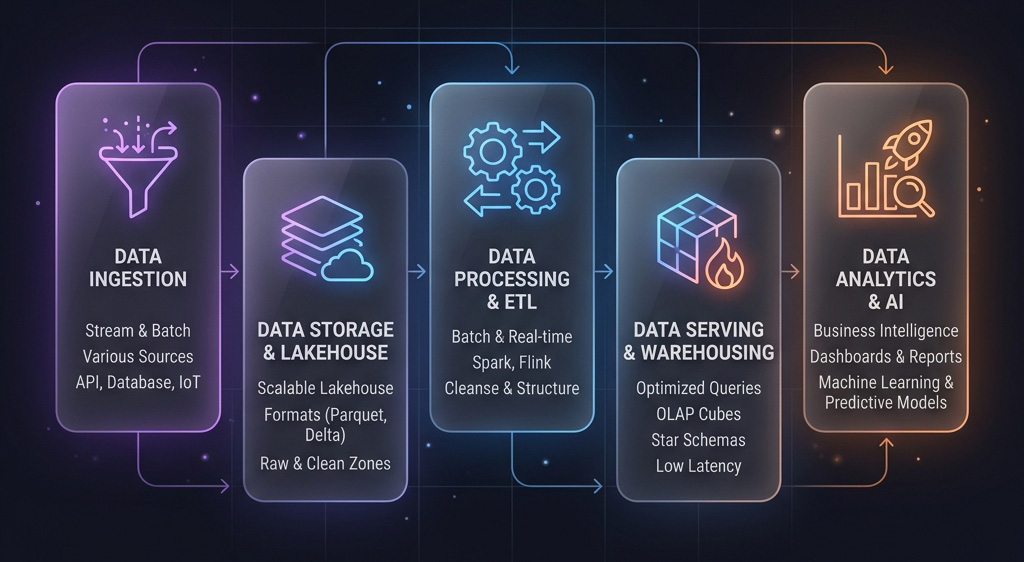
Five concrete steps worth taking now: audit every system that holds customer data and map the sync latencies and conflict rates between them; evaluate reverse ETL as the shortest path to warehouse activation, with Hightouch, Census, and RudderStack as the mature starting points; instrument the MAP as an API target rather than a UI-configured system; pressure-test the MAP vendor's agentic posture, specifically whether the API is modern enough to support autonomous execution at the speed and volume that agents operate at; and build toward a warehouse-first data foundation, because every AI capability worth having sits on top of that substrate.
If you want to go deeper on the CMO infrastructure side of this argument, my post on building a CMO dashboard with Claude Code and first-party data covers the operational complement to the architecture described here, including how a broken lead scoring model quietly undermines sales and marketing alignment long before anyone admits the MAP is the problem.
Before committing to any of those steps, it helps to know precisely where your stack sits today. The free MAP Architecture Readiness Assessment below maps your current architecture across the same seven dimensions covered in this post, from data fragmentation and sync latency to reverse ETL maturity, MAP API readiness, and identity resolution. It takes about two minutes and returns a tier placement with a plain-language breakdown of where the biggest gaps actually are.
The MAP Architecture Readiness Score places your stack in one of three tiers: The Campaign Log, The Integration Patchwork, or Warehouse-Native Ready, each with a specific remediation path mapped to the five steps above. The score doesn't prescribe a full migration. It tells you which step to prioritize first, and whether your biggest exposure is upstream in the data layer or downstream in the execution layer.
The Future of Legacy Marketing Automation: Demoted from Brain to Execution Pipe
Jon Miller is right that you don't build intelligence by bolting AI onto a rules-based engine. He's also right, by his own account across multiple recent interviews, that the MQL-optimization machine Marketo helped build created a generation of marketers doing sophisticated things in the wrong direction. The category he co-founded has stagnated precisely because it optimized for campaign execution at the expense of customer intelligence.
The future isn't MAP-less. It's MAP-humble. The warehouse holds the brain. The agentic layer makes the decisions. The MAP delivers the message. That's a legitimate and valuable role. It's just a fundamentally different one than "marketing operating system."
The real race is between two timelines: how quickly warehouse-native and agentic tools can build the execution maturity that MAPs have accumulated over twenty years, versus how quickly legacy MAP vendors can open their architecture enough to remain relevant in an agent-orchestrated world. The companies that understand the MAP Demotion Architecture now, and build their data foundation accordingly, will be the ones whose AI actually performs. Everyone else will have very sophisticated rules running on very incomplete customer data, which is exactly where we started in 2006.
Grateful for the engagement from Jon, someone who helped shape this entire space. These are the conversations worth having.
Frequently Asked Questions
What is warehouse-native marketing automation and how does it differ from a traditional MAP?
Warehouse-native marketing automation uses a cloud data warehouse, such as Snowflake or BigQuery, as the central customer data layer rather than a MAP's proprietary database. Traditional MAPs like Marketo or HubSpot only access data from their own channels, such as email opens and form submissions, while a warehouse-native approach consolidates behavioral, transactional, product, and intent data into a single governed profile. Marketing tools then access that unified profile directly, rather than maintaining their own fragmented copies.
Will agentic AI replace Marketo and HubSpot?
Agentic AI is unlikely to replace Marketo or HubSpot outright, but it is restructuring the role these platforms play in the GTM stack. The MAP Demotion Architecture positions MAPs as execution pipes handling email delivery, SMS, and channel rendering, while agentic AI systems handle decisioning, segmentation, and next-best-action logic upstream in the data warehouse. The MAP becomes a headless mouthpiece for decisions made above it, rather than the system of record it has historically been.
What is the free MAP Architecture Readiness Assessment?
The MAP Architecture Readiness Assessment is a seven-question diagnostic that scores your current marketing stack across seven architectural dimensions: data fragmentation, sync latency, warehouse foundation, reverse ETL maturity, MAP API configuration, identity resolution, and agentic readiness. It returns a score out of 14 and places your stack in one of three tiers: The Campaign Log, The Integration Patchwork, or Warehouse-Native Ready, each with a specific set of recommended next steps.
What is reverse ETL and why does it matter for marketing automation?
Reverse ETL is the process of syncing modeled data from a cloud data warehouse back to operational marketing tools, including ad platforms, email systems, and CRMs, on configurable schedules ranging from real-time streaming to daily batch. Tools like Hightouch, Census, and RudderStack enable marketing teams to activate warehouse data through an existing MAP without rebuilding the stack from scratch, making it the lowest-friction path to warehouse-native activation for teams that still have MAP contract obligations.
Why aren't legacy MAPs rebuilding their architecture to compete with warehouse-native tools?
Rebuilding a MAP as a warehouse-native execution layer would require ceding data ownership to the warehouse, which converts the MAP from a system of record with high switching costs to an infrastructure component with commodity pricing. That transformation is a business model change, not just an engineering one, which is why MAP vendors are adding AI features to the existing architecture rather than replacing it. The existing data architecture is what justifies the existing contract price.
What should a CMO do to prepare for agentic AI in marketing operations?
The highest-leverage starting point is auditing data infrastructure: mapping every system that holds customer data, quantifying sync latencies and conflict rates, and identifying whether a warehouse consolidation strategy exists. From there, evaluating reverse ETL platforms and instrumenting the existing MAP as an API target rather than a UI-configured system are the two moves that require the least organizational disruption while positioning the stack for agentic execution.
What is the MQL Industrial Complex and why is it relevant to MAP stagnation?
The MQL industrial complex refers to the symbiotic cycle between MAP vendors and B2B marketing advisory firms, in which consulting frameworks were sold alongside software to implement them, and both optimized for pipeline metrics increasingly divorced from actual buyer behavior. Jon Miller, co-founder of Marketo, has publicly acknowledged that this dynamic caused the category to "do wrong by the customer" by incentivizing volume and velocity over genuine buyer intelligence. This structural misalignment is one reason MAP innovation stagnated even as the underlying customer data problem became more acute.