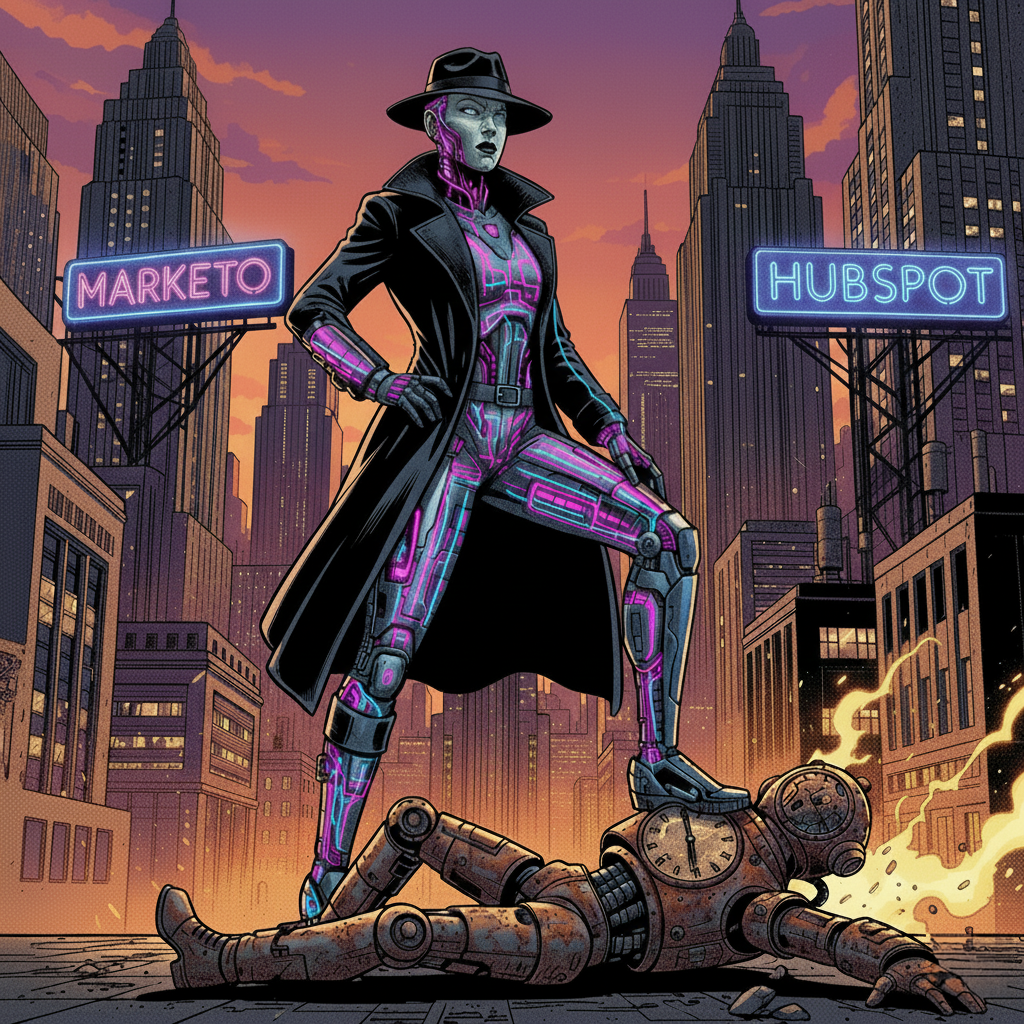
You spent the last two years getting your marketing automation house in order. You finally convinced finance to approve that Marketo upgrade. Your team stopped complaining about the lead workflows. You can actually explain what lead scoring means at after-parties without people’s eyes glazing over. (OK, I admit that the last example is impossible)
And then some thought leader drops a hot take about AI agents running autonomous campaigns, and now you’re fielding Slack messages from the CEO and lying awake at 2 AM, wondering if you just invested six figures in the business equivalent of a really expensive fax machine.
Welcome to the new era in marketing, where every CMO is simultaneously excited about AI and terrified they’re about to get disrupted by it.
Suppose you’ve invested years building sophisticated workflows in Marketo or HubSpot, watching your team master segmentation strategies and nurture campaigns. In that case, the rise of agentic AI might feel like a threat to everything you’ve built. I get it. When you hear about AI agents that can autonomously create campaigns, reallocate budgets in real time, and personalize content at the individual level, it’s natural to wonder if your carefully constructed marketing automation stack is about to become irrelevant.
But here’s the thing: the answer isn’t what you might expect.
The Real Story: It’s Not Replacement, It’s Evolution
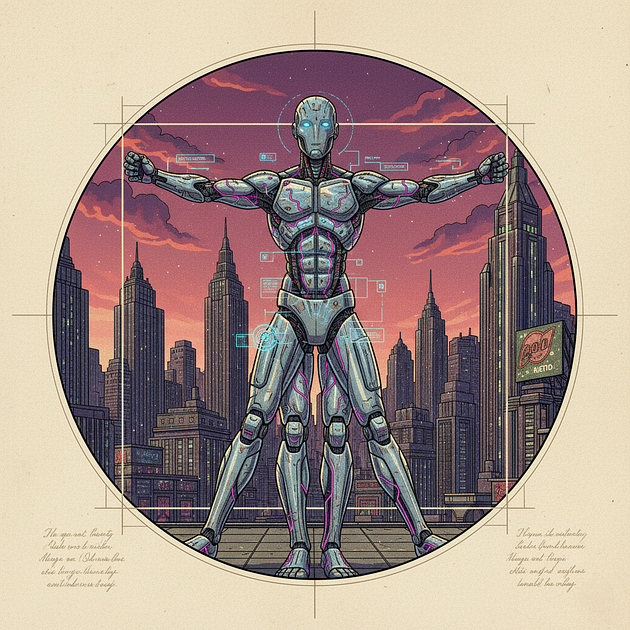
The marketing automation market isn’t dying. Far from it, actually. It’s projected to grow from $47 billion in 2025 to over $81 billion by 2030. HubSpot serves more than 100,000 customers worldwide, and Marketo (now Adobe Marketo Engage) continues to dominate the enterprise space with 5,000+ customers across 90 countries.
Meanwhile, agentic AI is experiencing explosive growth of its own. The market is expected to skyrocket from $7 billion in 2025 to $93 billion by 2032. Half of companies using generative AI will launch agentic AI pilots this year, and 85% of enterprises plan to implement AI agents by the end of 2025.
So both are growing. What gives?
The truth is, we’re not heading toward a winner-takes-all scenario. We’re witnessing something far more interesting: a fundamental convergence that will reshape how marketing technology operates.
What Makes Agentic AI Actually Different
Let’s be clear about what we’re talking about. Traditional marketing automation platforms like HubSpot and Marketo are brilliant at executing predefined workflows. You set the rules, and they follow them perfectly. If a lead downloads a whitepaper, trigger an email sequence. If someone reaches a certain score, alert sales. They’re reliable, predictable, and auditable.
Agentic AI systems work differently. They don’t just follow rules. They perceive their environment, make autonomous decisions, and take action independently to achieve defined goals. Instead of following explicit “if-then” logic, they analyze information, determine optimal actions, and execute them without explicit programming for every scenario.
Think of it this way: traditional automation is like a sophisticated assembly line. Agentic AI is more like a team of specialists who can assess situations and make judgment calls.
The practical differences are significant. Agentic systems can deliver true hyper-personalization at the individual level rather than segment-based targeting. They continuously learn from outcomes and optimize automatically. They can process unstructured data like images, audio, and conversational text alongside your structured CRM data. And perhaps most importantly, they adapt in real time rather than waiting for your quarterly review cycle.
The Plot Twist: Your Platforms Are Already Evolving
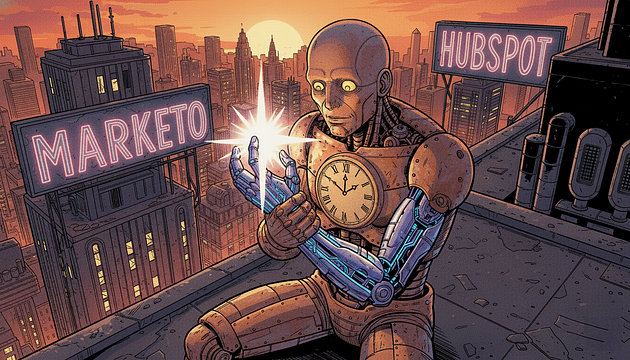
Here’s where it gets interesting. HubSpot and Marketo aren’t waiting to be disrupted. They’re actively building agentic capabilities into their platforms.
At INBOUND 2025, HubSpot unveiled more than 15 Breeze Agents designed to work within their existing platform. These include Customer Agents for autonomous service, Prospecting Agents for lead generation, and Journey Automation agents that make real-time decisions about customer paths. CEO Yamini Rangan explicitly stated they’re “transforming our platform to be an AI-powered customer platform.”
Marketo has integrated Adobe Sensei throughout its platform, adding AI-driven content recommendations, email generation tools, and predictive content features. Their connection to Adobe’s creative ecosystem means users can access Adobe Firefly for AI-generated images directly within their campaigns.
The platforms you’re already using aren’t being replaced. They’re becoming something new: orchestration layers for increasingly autonomous agentic systems.
The Architecture That’s Actually Emerging

Smart organizations aren’t choosing between traditional automation and agentic AI. They’re building layered systems that leverage both:
The Foundation Layer remains your traditional marketing automation platform. HubSpot or Marketo provides the structured data environment, compliance frameworks, and established integrations that enterprises depend on.
The Intelligence Layer is where agentic AI sits on top, making autonomous decisions about which workflows to trigger, which segments to target, what content to create, and how to optimize in real time.
The Orchestration Layer lets AI agents coordinate across multiple systems, managing complexity that would be impossible with rules-based automation alone.
This hybrid approach gives you the reliability and auditability of traditional platforms with the adaptability and intelligence of agentic systems. You’re not abandoning what works. You’re augmenting it with what’s next.
What This Means for Your Team
The real transformation isn’t just technological. It’s human.
By 2030, AI is projected to automate approximately 30% of work hours in marketing, primarily routine tasks like data entry, scheduling, and basic content variations. But this doesn’t mean marketers become obsolete. It means the role fundamentally transforms.
Technical skills like AI oversight, prompt engineering, and integration management will gain importance. But so will distinctly human capabilities: strategic thinking, creative direction, emotional intelligence, ethical judgment, and change management.
You won’t need to become a data scientist. You’ll need to become what I call an “AI conductor,” someone who can orchestrate autonomous systems while providing strategic direction, creative vision, and human judgment that no algorithm can replicate.
The Honest Challenges Ahead
Let’s not sugarcoat this. The transition won’t be smooth. Gartner predicts that nearly 40% of agentic AI projects will fail by 2027 due to high costs, ambiguous ROI, and inadequate risk management.
Enterprise-grade agentic AI deployments typically cost between $75,000 and $500,000 annually. Even more concerning, 65% of companies lack the foundational infrastructure needed, including clean data catalogs, unified customer platforms, and robust API integration layers.
Autonomous systems also introduce new risks. Their decision-making can be opaque. Their outputs aren’t always predictable. Without proper governance, you risk creating dozens of disconnected agents that duplicate efforts and create chaos.
What You Should Do Right Now
Don’t panic, but don’t wait either. Start with these priorities:
Invest in your data infrastructure first. Before deploying sophisticated agents, ensure you have clean, structured data with strong governance. This is the foundation on which everything else depends.
Begin with high-ROI, lower-risk pilots. Try agentic systems for customer service automation, content generation, or real-time budget reallocation. Prove value in contained environments before expanding.
Start upskilling your team now. Train marketers on AI oversight and governance. Emphasize human skills that complement AI: creativity, strategic thinking, and emotional intelligence.
Establish clear governance frameworks. Define boundaries for agent autonomy. Implement monitoring systems. Create audit trails. Build kill switches for when things go wrong.
The Future Is Hybrid, Not Binary

Will AI agents replace Marketo and HubSpot? No. But they will fundamentally transform what these platforms do and how you use them.
The organizations that thrive won’t be those who choose between automation and AI. There’ll be those who learn to orchestrate hybrid human-AI teams, combining the reliability of traditional platforms with the intelligence of agentic systems.
The transformation is already underway. The question isn’t whether to embrace this hybrid future. It’s how quickly you can position your organization to capitalize on it.
And honestly? That’s a much more interesting question to answer.